The founder is the technical bottleneck
Too many decisions still route through one person, and strategic time is being consumed by architecture, hiring, or delivery firefighting.
A fractional CTO is a part-time senior technology leader who owns technical judgment, roadmap tradeoffs, and engineering direction before a company is ready for a full-time executive hire. Surton steps in when architecture has drifted, delivery has slowed, or a leadership gap is putting product and revenue at risk.
Strong fractional CTO services do more than advise from the edge. The role is to enter the system, build an accurate picture, make sharper technical decisions, and create the conditions for the team to execute with less confusion.
20+
years Chris has spent leading complex software systems
100-day
planning lens for roadmap, team, and technical baseline
Lean
senior leadership without full-time executive overhead
There is a stage where a founder, head of product, or engineering manager can no longer absorb every technical decision personally, but the business still is not ready for a full-time CTO search. That gap is dangerous. Roadmaps drift. Vendors go unchallenged. Hiring decisions get made without a consistent technical standard. Problems feel urgent, but no one is truly accountable for the whole system.
Fractional CTO work exists to close that gap. Surton steps in as a senior operating partner who can understand the business context, assess the technical reality, and give the organization a stronger decision-making center. That often means evaluating architecture, reviewing incident patterns, clarifying delivery responsibilities, coaching technical leaders, and helping founders distinguish between a visible problem and the real bottleneck underneath it.
The value is not just technical advice. It is judgment applied at the right altitude. A strong fractional CTO can move between founder conversations, engineering reviews, roadmap tradeoffs, and team design without losing the thread. That cross-level perspective is what most companies are missing when execution starts feeling noisy.
The best outcome is a business that becomes easier to lead. Priorities are clearer. Risks are more visible. The team knows where technical authority sits. And when the company is ready for a permanent CTO, the handoff is far cleaner because the system has already been made legible.
This work usually starts when the technical challenges are no longer isolated incidents. They have become leadership problems.
Too many decisions still route through one person, and strategic time is being consumed by architecture, hiring, or delivery firefighting.
The team is shipping work, but priorities, ownership, and technical standards are inconsistent enough to slow momentum.
A hiring plan, platform migration, vendor decision, or product shift is coming, and the company needs a more credible technical decision-maker in the room.
Most founders do not need another vague advisor. They need to know what a fractional CTO should own, when the role is appropriate, and how to compare it with the other technical leadership options on the table.
The role creates a temporary technical decision center for the company. The work is usually a blend of executive alignment, engineering review, roadmap sequencing, and team coaching.
Fractional CTO support is strongest when the need is urgent and meaningful, but the company should not yet commit to a permanent executive search.
The right provider should be able to operate with executives and engineers without hiding behind strategy language or getting trapped in ticket-level work.
The title matters less than the accountability model. Use the comparison below to decide what kind of technical leadership gap you actually have.
Fractional CTO
Companies that need embedded senior technical judgment, roadmap leadership, and operating cadence without a full-time hire yet.
More accountable than an advisor, more flexible than a permanent executive, and broader than a narrow consultant.
Technical advisor
Founders who need occasional input, board-level perspective, or a second opinion on a specific decision.
Usually outside the operating rhythm and not responsible for day-to-day execution quality.
Interim CTO
Organizations replacing a CTO or covering a known leadership vacancy for a defined transition period.
Often closer to a full-time temporary executive role; useful when the mandate and handoff are already clear.
Technology consultant
Narrow problems such as architecture review, platform selection, audit, migration planning, or vendor evaluation.
Useful for defined deliverables, but usually does not own the broader leadership system.
VP Engineering
Teams that primarily need people management, delivery process, hiring, and team execution leadership.
Often more delivery- and management-focused; may not cover founder-level technology strategy or board-facing tradeoffs.
Strong fractional CTO work is hands-on in the right places and opinionated about where clarity is missing. We begin by understanding the system as it actually operates, not as it appears in a roadmap doc.
We learn how the company makes money, how the team ships, where customers feel friction, and how the architecture supports or undermines the next stage of growth.
We identify the technical risks that matter most, clean up ownership where needed, and create better forums for priorities, architecture, and delivery issues.
We connect business goals, product direction, team capability, and technical execution into a plan the organization can actually support.
Whether the next step is continued fractional leadership, a full-time hire, or a narrower advisory role, we help the company transition without losing momentum.
A useful fractional CTO engagement leaves the company with stronger systems for decision-making, execution, and future hiring.
A clear assessment of architecture, delivery process, reliability concerns, team dependencies, and where the business is carrying technical fragility.
A more credible view of what the next 6 to 12 months should prioritize and what tradeoffs leadership is actually choosing.
Practical guidance on leadership gaps, role design, hiring priorities, and where internal capability needs to mature.
Decision forums, planning rhythms, and technical communication patterns that help the company run with less founder dependency.
Fractional CTO work is especially effective when the company needs executive-level technical judgment but should not overhire or guess its way into leadership structure.
Surton's leadership model is shaped by founder experience, platform scale, and years of practical engineering management — not detached executive theater.


'%3e%3cpath%20id='Path_1'%20data-name='Path%201'%20d='M165.6,13.6H169l2.794,15.3h.067l2.294-15.3h3.86L173.786,37.62h-3.46l-2.992-15.866h-.067l-2.8,15.866h-3.458L156.453,13.6h3.86l2.528,15.3h.067Z'%20transform='translate(-60.12%20-5.227)'%20fill='%23253746'/%3e%3cpath%20id='Path_2'%20data-name='Path%202'%20d='M200.206,19.217c0-3.393,2-6.152,6.321-6.152s6.321,2.759,6.321,6.152V31.591c0,3.393-2,6.154-6.321,6.154s-6.321-2.761-6.321-6.154Zm4.125,12.275c0,1.8.533,2.661,2.2,2.661s2.2-.866,2.2-2.661V19.317c0-1.8-.533-2.659-2.2-2.659s-2.2.863-2.2,2.659Z'%20transform='translate(-76.932%20-5.02)'%20fill='%23253746'/%3e%3cpath%20id='Path_3'%20data-name='Path%203'%20d='M236.738,37.62h-4.125V13.6h5.79c4.622,0,6.986,1.962,6.986,7.087,0,3.858-1.5,5.42-2.895,6.053l3.492,10.878H241.8l-2.93-9.948a19.713,19.713,0,0,1-2.129.1Zm0-13.24H238.2c2.23,0,3.061-.831,3.061-3.691S240.432,17,238.2,17h-1.464Z'%20transform='translate(-89.385%20-5.227)'%20fill='%23253746'/%3e%3cpath%20id='Path_4'%20data-name='Path%204'%20d='M266.421,17.194H262.43V13.6h12.108v3.592h-3.991V37.62h-4.125Z'%20transform='translate(-100.843%20-5.227)'%20fill='%23253746'/%3e%3cpath%20id='Path_5'%20data-name='Path%205'%20d='M292.029,37.62V13.6h4.125v9.779h4.391V13.6h4.125V37.62h-4.125V26.975h-4.391V37.62Z'%20transform='translate(-112.217%20-5.227)'%20fill='%23253746'/%3e%3cpath%20id='Path_6'%20data-name='Path%206'%20d='M330.344,13.6h3.393l2.8,15.3h.065l2.3-15.3h3.858L338.528,37.62h-3.46l-2.994-15.866h-.065l-2.8,15.866h-3.46L321.2,13.6h3.858l2.528,15.3h.067Z'%20transform='translate(-123.425%20-5.227)'%20fill='%23253746'/%3e%3cpath%20id='Path_7'%20data-name='Path%207'%20d='M364.948,37.62V13.6h4.125v9.779h4.391V13.6h4.125V37.62h-4.125V26.975h-4.391V37.62Z'%20transform='translate(-140.237%20-5.227)'%20fill='%23253746'/%3e%3crect%20id='Rectangle_622'%20data-name='Rectangle%20622'%20width='4.125'%20height='24.018'%20transform='translate(245.233%208.375)'%20fill='%23253746'/%3e%3cpath%20id='Path_8'%20data-name='Path%208'%20d='M418.637,37.62V13.6h4.125V34.028h6.484V37.62Z'%20transform='translate(-160.868%20-5.227)'%20fill='%23253746'/%3e%3cpath%20id='Path_9'%20data-name='Path%209'%20d='M445.969,13.6V37.619H457.48V34.027h-7.388V26.974h5.324V23.38h-5.324V17.193h6.921V13.6Z'%20transform='translate(-171.371%20-5.226)'%20fill='%23253746'/%3e%3cpath%20id='Path_10'%20data-name='Path%2010'%20d='M77.731,8.492,70.726.558A1.661,1.661,0,0,0,69.526,0h-.038a1.642,1.642,0,0,0-1.235.563l-17.36,19.88L34.453,1.407A1.646,1.646,0,0,0,33.32.839c-.037,0-.077,0-.114,0a1.649,1.649,0,0,0-1.1.422l-7.926,7.1a1.654,1.654,0,0,0-.144,2.3l5.87,6.77-2.622,3.024L10.579.861A1.647,1.647,0,0,0,9.4.286c-.025,0-.052,0-.075,0A1.669,1.669,0,0,0,8.163.762L.483,8.415A1.65,1.65,0,0,0,.4,10.657L26.021,40.2a1.652,1.652,0,0,0,.95.538,1.592,1.592,0,0,0,.31.03,1.64,1.64,0,0,0,1.243-.568L39.09,28.02,49.633,40.2a1.642,1.642,0,0,0,1.235.568H50.9a.4.4,0,0,0,.055,0,1.638,1.638,0,0,0,1.2-.568l6.993-8.092,18.6-21.448a1.652,1.652,0,0,0-.01-2.168'%20transform='translate(0%200)'%20fill='%23ff7a3d'/%3e%3c/g%3e%3c/svg%3e)

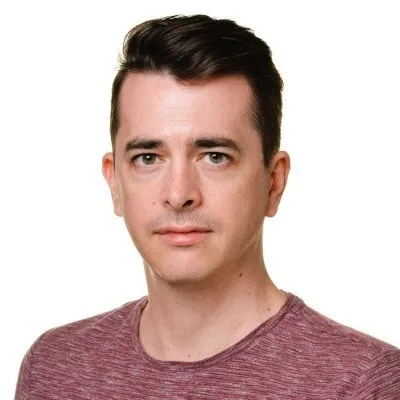
Steve Kinder
CTO, Paperplanes UK
“Surton was an absolute pleasure to deal with. They completely understood what we wanted to achieve, and they delivered a truly fantastic deliverable, bang on time.”
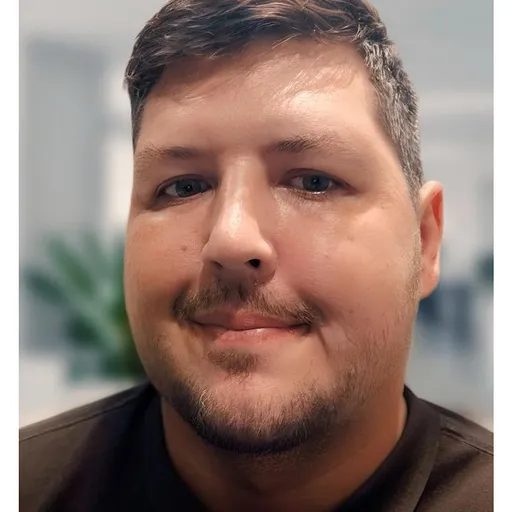
Andrew Kwitko
CEO, Mapovis
“Chris from Surton provided us with a great initial experience. He solved a tricky issue we had been struggling to fix for many hours in less than 30 minutes.”
The right engagement model should remove confusion, not add another vague advisor relationship. These are the questions we hear most often.
A fractional CTO is a senior technology leader who works with a company part-time or on a defined engagement to provide CTO-level judgment before a full-time hire makes sense. The role usually covers architecture, roadmap tradeoffs, technical risk, hiring guidance, vendor oversight, and engineering operating rhythm.
A technical advisor usually helps from the perimeter. A fractional CTO takes more direct responsibility for understanding the system, shaping the roadmap, guiding technical decisions, and participating in operating rhythms with the team and leadership. The role is more embedded and more accountable.
Cost depends on scope, cadence, and responsibility. A monthly advisory cadence costs less than an embedded operating role that reviews architecture, leads planning, coaches managers, and owns technical risk with leadership. The right question is not only hourly rate; it is what decisions and outcomes the role is accountable for.
If the business already needs constant executive-level technical leadership across hiring, team management, board communication, and multi-quarter execution, a full-time CTO may be the right answer. Fractional support is strongest when the need is urgent and meaningful, but not yet full-time or fully defined.
An interim CTO usually fills a known executive vacancy for a defined transition period. A fractional CTO is often more flexible: the company may need senior technical leadership, but not every day and not necessarily as a direct replacement for a departing executive.
Often, yes. Startups commonly need senior technical judgment before they can justify or recruit a full-time CTO. Fractional CTO support can help founders evaluate architecture, make early hiring decisions, manage vendors, and avoid technical choices that become expensive later.
Yes. In many cases that is where the leverage is. We can lead technical conversations with internal engineers, agencies, or offshore teams and create clearer standards for scope, architecture, delivery, and accountability.
That depends on the business stage, but common areas include roadmap review, architecture decisions, incident or delivery triage, hiring input, leadership alignment, and coaching for engineering managers or technical leads. The work is shaped around the highest-value leadership gaps at that moment.
These articles expand on the operating patterns, leadership decisions, and implementation details that show up inside engagements.
A practical guide to what a fractional CTO does, when to hire one, what it costs, and how to compare fractional CTO support with advisors, consultants, and interim CTOs.
A practical 100-day plan for new CTOs: learn the business, assess the team, and leave with a roadmap the company can actually execute.
A complete framework for choosing between offshore teams, freelancers, and agencies based on your stage, capabilities, and problem type. Includes decision matrix, evaluation rubrics, and cost benchmarks from 50+ Surton engagements.
Whether you need a working AI workflow, executive clarity before you scale, or senior technical leadership you can lean on, we've done this before. Bring us the bottleneck and we'll help you ship your way through it.